
When one thinks of Poblacion, Makati, most people immediately think of all the swanky restaurants and bars, the cool cafes, and the various creative hubs scattered across the district. After all, Poblacion is currently the epicenter of Metro Manila’s burgeoning nightlife scene and one of its brighter tourism hubs. However, Poblacion is a historic town steeped in tradition, and this is on brilliant display during Holy Week.
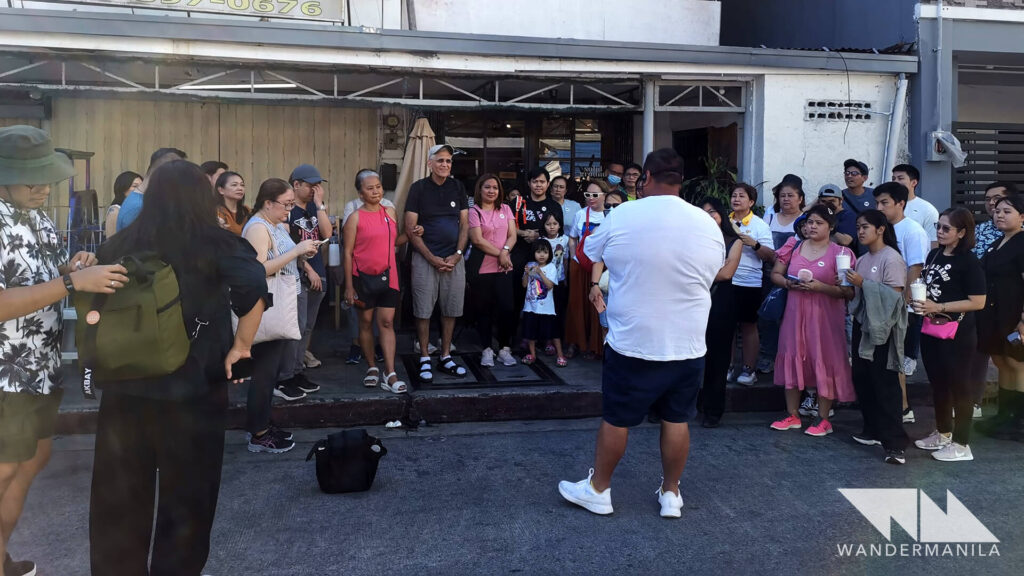
WanderManila recently staged the second Sampiro Kalbaryo Tour last March 28, 2024. The tour was first conceptualized and staged back in 2023 to introduce the concept of the Kalbaryos or Street Churches that the families of Poblacion have been staging ever since 1920. The participants were an interesting mix of longtime Poblacion residents and guests from other cities across Metro Manila. Quite a few have even attended the tour last year! All in all, everyone had an illuminating and educational time learning about a time-honored tradition in a city that is not usually associated with tradition and heritage.
The Beginning
We started our tour in Villena street, where there were four Kalbaryos set up. Among them was Samahang Ilaya, the oldest Kalbaryo association in Poblacion.
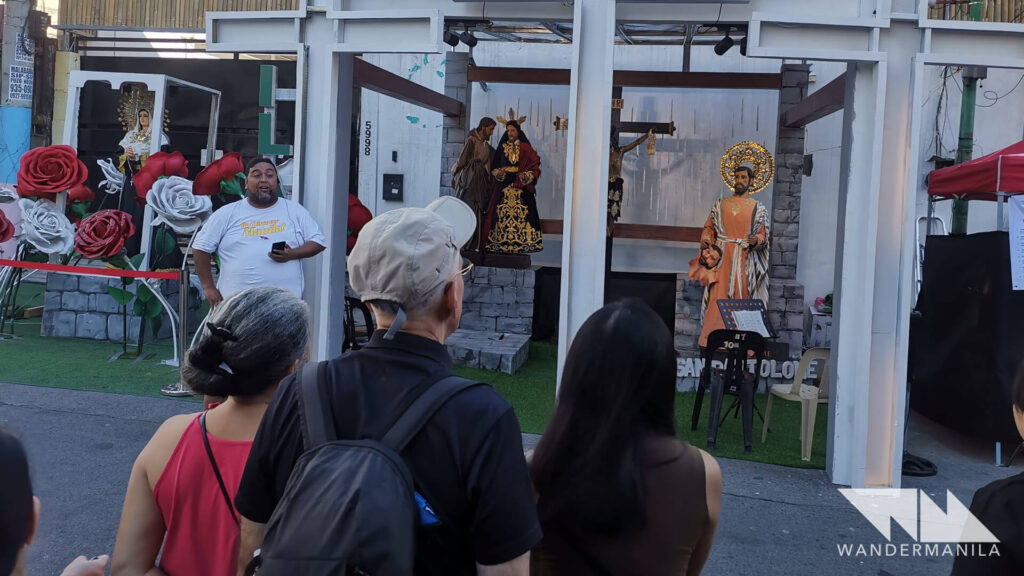
The tradition of the Kalbaryo started back in 1920. Before that year, a family living in Calle Ilaya would hold a simple pabasa ng pasyon. Their neighbors then started participating, and over time the pabasa got bigger and bigger until the family brought it outside of their house. And then, in 1920, they built a shrine in the street to accommodate the participants. That is why Samahang Ilaya is considered the first ever Kalbaryo group.
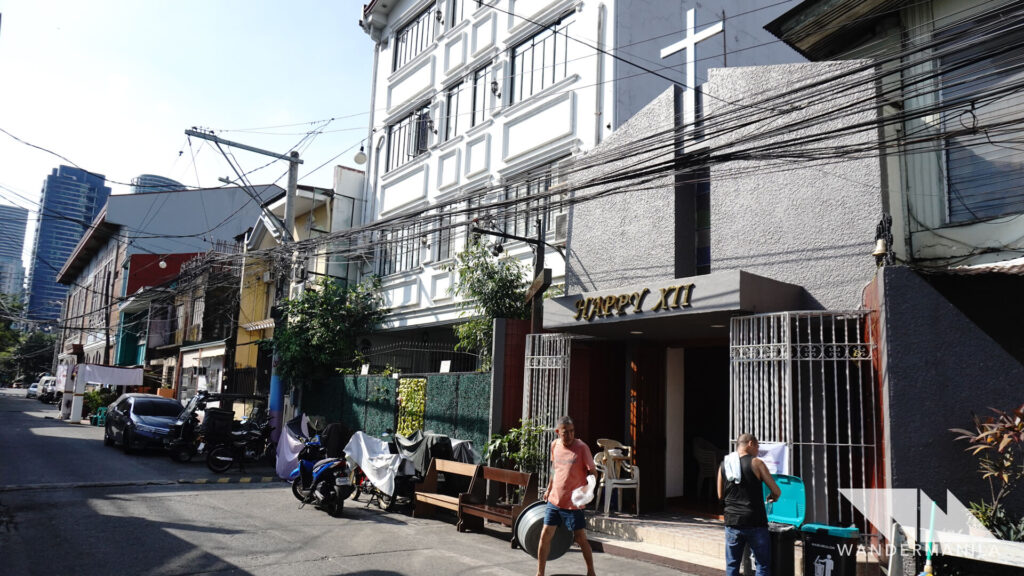
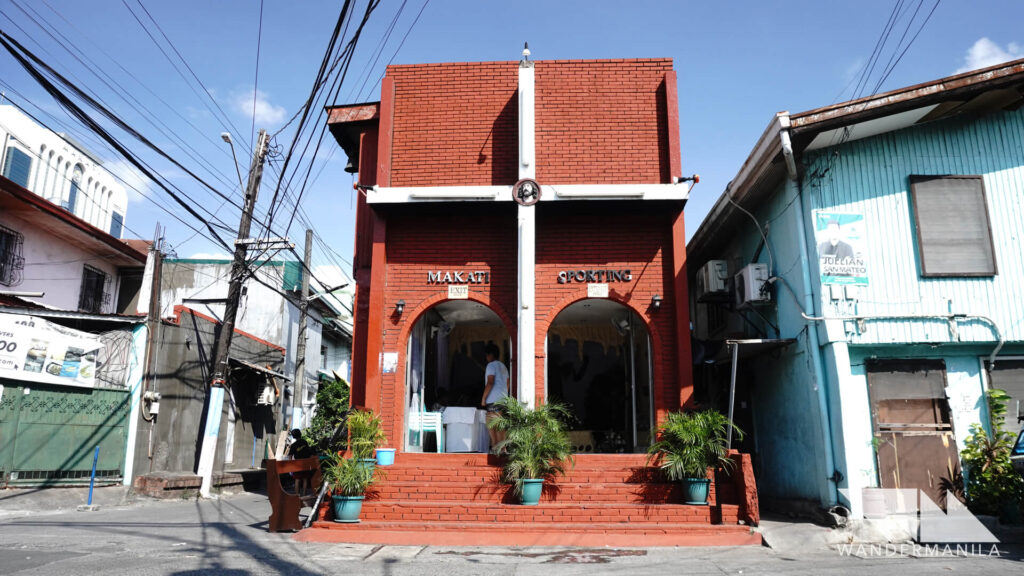
Taking inspiration from this, Makati Sporting, a sports-oriented group based in Poblacion, then staged their own Kalbaryo in 1921. Before World War II broke out, there were five main Kalbaryos, namely Ilaya, Makati Sporting, Samahang Nazareno, Likod Simbahan, and Happy XII. After a brief hiatus during the Japanese Occupation, the people of Poblacion restarted the Kalbaryo tradition, and over time the number of street churches increased. Amazingly enough, none of the Kalbaryos founded from 1920 have died out. Every single one of them still exists to this day and are highly active.
Of local culture and humor
It wouldn’t be a bonafide local tradition if a bit of Filipino humor didn’t make it into the mix. For starters, it’s easy to assume the kalbaryo tradition was named after Christ’s journey of suffering to the cross, which would be an easy fit for the tradition. However, according to longtime residents, the term “kalbaryo” came about because, back in the day, staging the street churches and doing processions across hilly, dusty Poblacion during the early days was a “kalbaryo” (read: extremely uncomfortable).
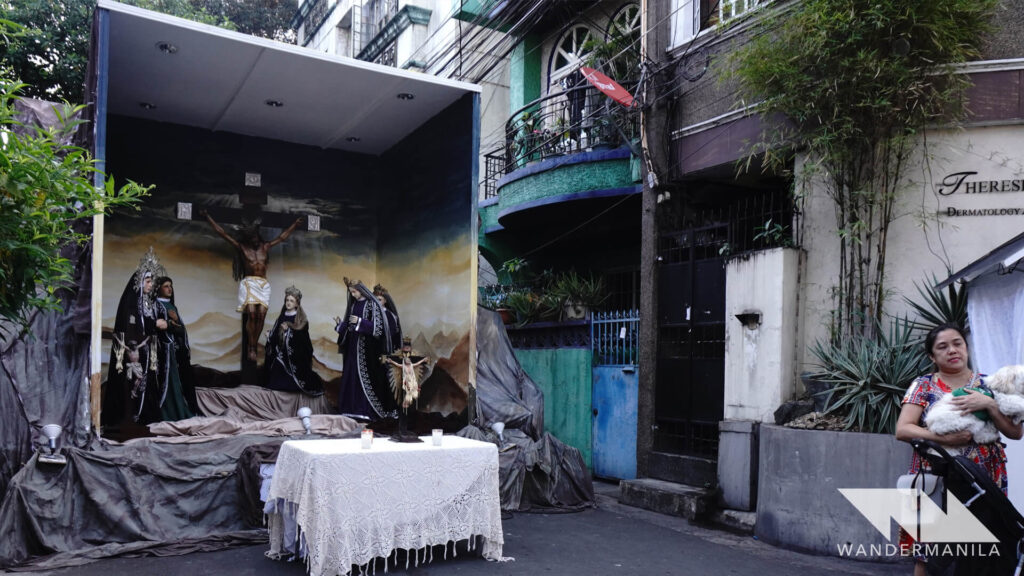
Even the names of the various street churches did not escape the Filipino penchant for tongue-in-cheek humor. For example, we stopped in front of a kalbaryo named “Bla-Gag”, which was named after the noise one makes when falling off a chair after getting too drunk. Two kalbaryos, Samahang Highlanders and Ilaya Heights, derive their names from the fact they’re located in “upper” Poblacion. Another kalbaryo, Poultry, got its name from the poultry business besides the kalbaryo. One of the older kalbaryos called themselves “Likod Simbahan” because, well, they were located behind the St Peter and Paul Church. And when some members from Likod Simbahan put up their own kalbaryo, they named the new group “Simba Likod”.
Deep roots in the community
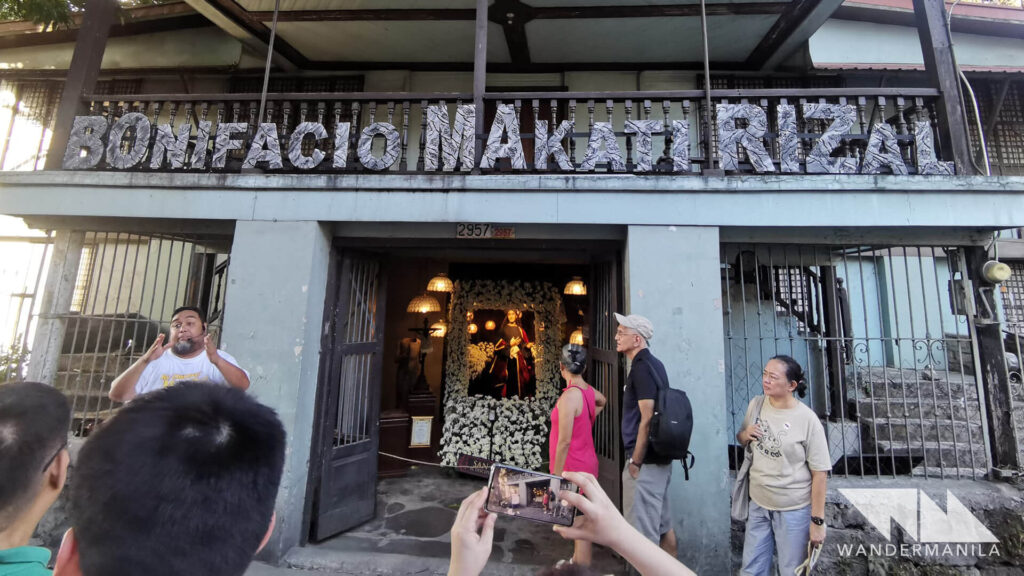
Another kalbaryo we visited was Bomariz, which was short for “Bonifacio Street, Makati, Rizal” (Makati used to be part of Rizal Province and only became part of Metro Manila in 1975). Interesting name aside, the Bomariz kalbaryo also has one of the oldest crucifixes in Poblacion, which headlined the procession of crucifixes held on Holy Wednesday. Another point of interest here was that Bomariz was also located in the Cu-Unjieng Heritage House, one of the four heritage houses left in Poblacion.
While most of the kalbaryos are temporary fixtures that pop up during Holy Week, quite a few of them are permanent fixtures, funded and built by their respective associations. Some of them are used for special religious occasions or for wakes, but oftentimes they just lay dormant until the next Holy Week is upon us.
A Holy Week experience
Of course, no tour of Poblacion would be complete without visiting the St Peter and Paul Parish, also known as the San Pedro de Macati Church. First constructed by the Jesuits back in 1608, the church has long been the foundation of Poblacion and one of the reasons why the residents of Poblacion have not forgotten their customs and traditions despite the changing times.
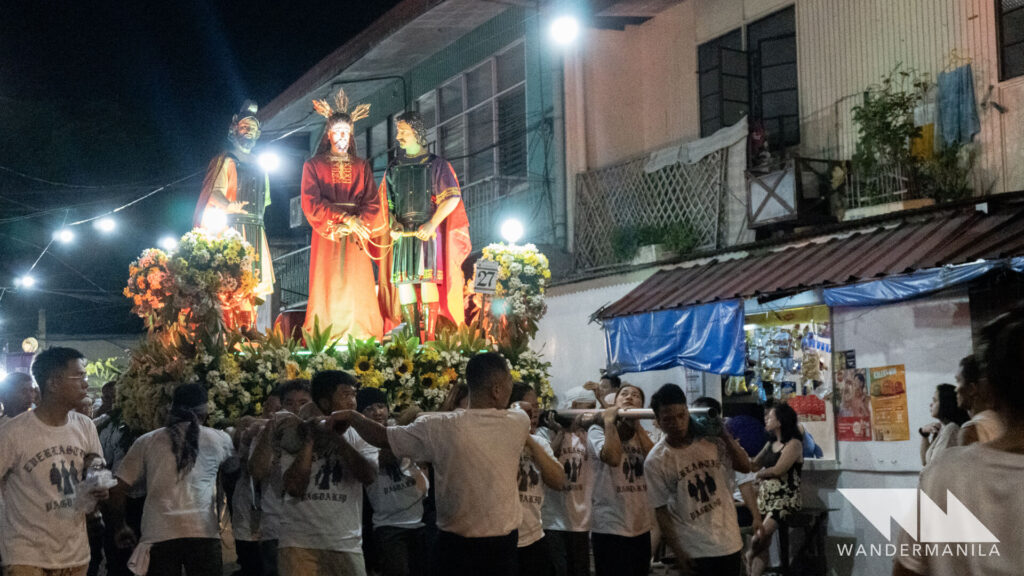
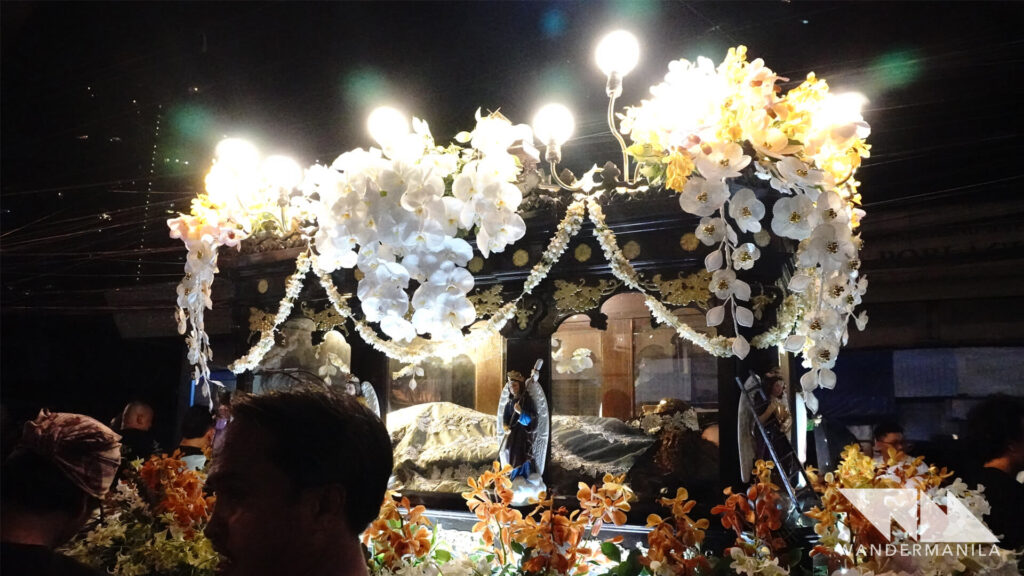
And while the kalbaryos themselves are reason enough to visit Poblacion during Holy Week, there are actually a lot of activities happening within the district during this period of time. Processions, pabasas large and small, community feeding, and the like. The most awaited event would be the Procession of the Lord’s Burial, which takes place on Good Friday. Here, the various imahe from the kalbaryos are paraded all over the district, a colorful and poignant event.
When the next Holy Week comes along, and you choose to stay in Metro Manila, do drop by Poblacion so you can see how a district so associated with modern fun still manages to hold on to its customs and traditions.